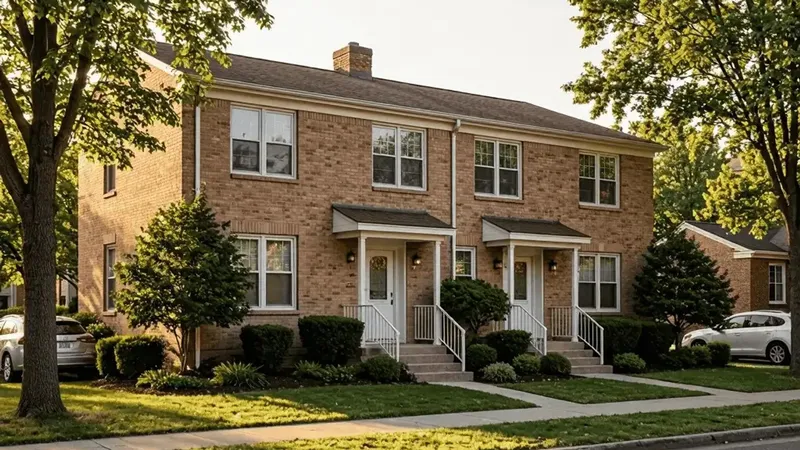
Buying an investment property is different from buying a home to live in — the numbers have to work on their own. Here are five steps I walk through with investor clients before they make an offer, along with the rent and yield data that actually shapes those numbers across Hamilton, Burlington, and the surrounding communities.
1. Get clear on your numbers first
Before you look at a single property, talk to a mortgage broker about financing for investment properties. The minimum down payment for a non-owner-occupied rental in Canada is 20% — mortgage default insurance isn’t available on investment properties, so lenders require more equity upfront to offset that risk. Lenders will also weigh your debt service ratios, though most count 50–100% of the property’s expected rental income toward qualifying. Get a realistic sense of your budget after accounting for closing costs and a reserve fund before you start touring.
2. Research rents, not just prices
Look at comparable rents for the unit type and area you’re considering — not just what similar properties have sold for. As of early 2026, a 1-bedroom unit in Hamilton rents for roughly $1,753 a month, a 2-bedroom for about $2,086, and a 3-bedroom for around $2,650. Burlington runs higher across the board, with 1-bedrooms closer to $2,000–$2,135 and 2-bedrooms near $2,395. Cash flow — not appreciation — is what makes an investment property work long-term, and it starts with knowing these numbers cold for the specific area you’re buying in. See current pricing context on the Hamilton and Burlington market reports.
3. Understand the area’s tenant profile
Tenant profile varies block by block across this corridor. Areas near McMaster University, like Westdale, tend to attract student tenants with their own seasonal leasing pattern — typically May or August turnovers — while family-oriented communities like Ancaster, Dundas, and Waterdown rent more slowly but with much longer tenancies, since purpose-built rental stock is scarce there to begin with. Stoney Creek and Hamilton Mountain sit in between, with a mix of newer townhome rentals and established neighbourhoods.
4. Factor in maintenance and management
Older housing stock — common across much of Hamilton’s lower city and parts of Dundas — can mean higher near-term maintenance costs than newer builds in Stoney Creek Mountain or Waterdown. Decide upfront whether you’ll self-manage or budget for a property manager, especially if you’re investing from outside the immediate area or taking on a tenant profile (like students) with a more demanding turnover cycle.
5. Run the numbers before you fall in love
It’s easy to get excited about a property’s potential. Before submitting an offer, run a conservative cash-flow projection that includes mortgage payments, property tax, insurance, vacancy allowance, and maintenance reserves. If you haven’t already, the real estate terms glossary covers financing terms like amortization and CMHC insurance that come up constantly in this kind of analysis.
Where the numbers tend to work best right now
Yield isn’t uniform across this corridor. Hamilton Mountain and Stoney Creek currently offer some of the strongest cash-on-cash returns for investors comfortable self-managing — older purpose-built apartments there turn over at controlled rates under Ontario’s rent guideline, while newer secondary-market units reset closer to full market rent on every turnover. Ancaster, Dundas, and Waterdown deliver a different trade: compressed cap rates, but longer-tenured, lower-turnover tenants. Neither approach is objectively better — it depends on whether you’re optimizing for yield or for low management overhead.
Rent growth on turnover is still running 6–9% year-over-year through 2026 across the Hamilton market, cooling from a 12.9% peak but still well above the provincial rent guideline — a meaningful tailwind for the income side of an investment, even where prices have flattened. For comparison, Hamilton’s overall affordability case against Toronto remains strong: Hamilton’s average sale price was $755,202 in May 2026 against Toronto’s $1,069,700 the same month, a gap that continues to draw both owner-occupiers and investors west along the GO corridor. If you’re weighing renting an investment unit yourself before buying one, renting vs. buying walks through that math from the occupant side.
Local knowledge matters
Every neighborhood in the Hamilton–Burlington corridor has different rental dynamics, tenant profiles, and yield potential. If you’re exploring an investment purchase, reach out and I can help you compare areas based on what you’re trying to achieve, or browse current listings to see what’s available now.