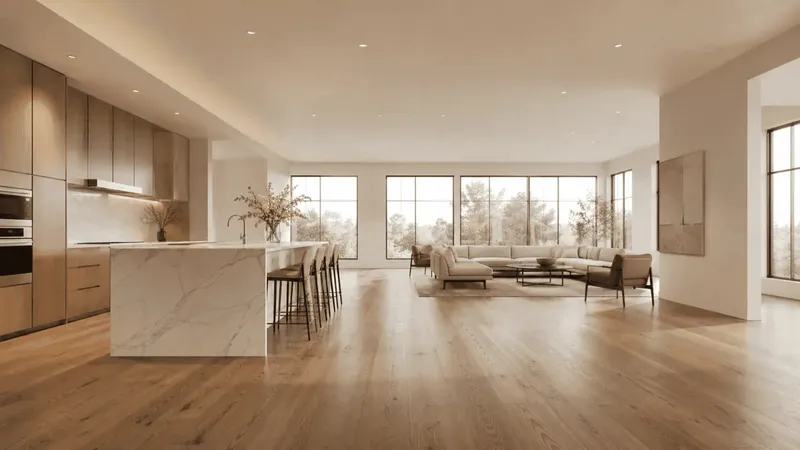
It’s one of the most common questions I hear from clients: is it better to keep renting, or is now the time to buy? There’s no single right answer — it depends on your finances, your timeline, and which of the communities I work in you’re looking at, since renting and buying trade off very differently in Hamilton than they do in Ancaster or Burlington. Here’s how to think it through, with real numbers where I have them.
Renting vs. buying right now — the corridor snapshot
Hamilton’s average sale price was $755,202 as of May 2026, while a typical 2-bedroom rental in the city runs roughly $1,990 to $2,100 a month (1-bedrooms trend closer to $1,600–$1,850). Burlington is a different market altogether: its average sale price was $1,205,121 in May 2026, against 2-bedroom rents closer to $2,395 and 1-bedrooms around $2,000–$2,135.
Ancaster, Dundas, Waterdown, and Stoney Creek tell a quieter story: none of them show up as separate markets in any rental tracker I checked. Their rental activity gets folded into Hamilton’s city-wide numbers, which itself tells you something useful — there simply isn’t much purpose-built rental housing in these communities. If renting in one of them specifically is the goal, expect a smaller, slower-moving pool of private-house rentals rather than purpose-built buildings.
The case for renting
Renting offers flexibility. If you’re not sure how long you’ll stay in an area, or your income isn’t yet stable enough for a mortgage pre-approval, renting can make sense while you save for a down payment and build your credit profile. It also shifts maintenance and major repair costs onto someone else — useful if you’d rather not budget for a new roof or furnace on short notice.
When renting makes more sense in this market
- You expect to relocate within the next two to three years.
- You’re still building your down payment or credit profile.
- You want to “test drive” a neighbourhood — say, Westdale or downtown Burlington — before committing to it long-term.
- Your income or job situation isn’t stable enough yet for a comfortable mortgage pre-approval.
The case for buying
Buying builds equity over time, and locks in your housing costs against future rent increases. In the Hamilton–Burlington corridor, many buyers find that a mortgage payment on a starter home is comparable to — or only modestly higher than — rent on an equivalent space, especially outside the most expensive neighborhoods, though as the numbers above show, that gap has widened in some markets recently.
When buying makes more sense locally
- You expect to stay put for at least three to five years, which is usually enough time to absorb the upfront transaction costs.
- Your income is stable enough to comfortably qualify, with room left over for maintenance and property tax.
- You’re tired of rent increases and want a payment that’s predictable for the life of your mortgage term.
- You’re commuting to a GO station and want to lock in a location near transit before prices there climb further.
If you want the full walkthrough of what buying actually involves, key steps to buying a house covers the process from pre-approval to closing day.
Rent vs. buy, community by community
The city-wide averages above only tell part of the story. Here’s how renting and buying actually play out across the communities I work in.
Hamilton
Hamilton has the most balanced rental market of the six — a real mix of purpose-built apartments, condos, and rental houses across price points, which makes it the easiest place in this corridor to rent comfortably while you save toward a purchase. It’s also where first-time buyers and investors tend to find the most accessible entry points. See the Hamilton community page for a fuller picture of pricing by neighbourhood.
Burlington
Burlington skews toward buying, particularly for families and lakefront buyers — its rental stock is concentrated mostly in downtown condos and a handful of purpose-built buildings, which keeps rental supply tighter than the sale market. If renting first appeals to you here, downtown Burlington is the most realistic place to look. More on the area: Burlington community page.
Ancaster
Ancaster is heritage village turned upscale suburb, and it carries one of the highest price points in the region — strong schools and ravine lots come at a premium. Purpose-built rentals are scarce here; most people who want to live in Ancaster long-term end up buying, sometimes starting in Ancaster Village itself or in the more accessible Meadowlands. See the Ancaster community page for more.
Dundas
Dundas is a walkable valley town known for its waterfalls and character homes — appealing to downsizers and buyers drawn to a tight-knit, low-turnover community. Rental inventory here is thin and mostly limited to private houses, so renting tends to mean a longer search than in Hamilton proper. Details on the Dundas community page.
Waterdown
Waterdown is one of the fastest-growing communities between Hamilton and Burlington, popular with families and move-up buyers who want more space without leaving the corridor. As a historic mill town with mostly newer subdivisions, it has very little rental stock — buying is the default path for most people who settle here. More at the Waterdown community page.
Stoney Creek
Stoney Creek runs from the Lake Ontario shoreline up the escarpment, with new builds alongside established neighbourhoods — and it offers some of the more accessible price points in the corridor for first-time buyers and families. Newer townhome developments here also bring a bit more rental inventory than Ancaster, Dundas, or Waterdown. See the Stoney Creek community page for a closer look.
Real numbers — comparing monthly costs
This kind of comparison only holds up where I have real, current pricing — which right now means Hamilton and Burlington. Here’s an illustrative monthly mortgage payment for each, assuming 20% down, a mid-4% rate (roughly where 5-year fixed rates sat as of June 2026), and a 25-year amortization — before property tax, insurance, or condo fees.
| Hamilton | Burlington | |
|---|---|---|
| Average sale price (May 2026) | $755,202 | $1,205,121 |
| Illustrative mortgage payment | ~$3,360/mo | ~$5,360/mo |
| Typical 2-bedroom rent | ~$1,990–$2,100/mo | ~$2,395/mo |
In both markets, renting currently comes out ahead on a pure monthly-payment basis — sometimes by a wide margin in Burlington’s case. That doesn’t make buying the wrong move; it means the case for buying has to rest on equity-building and long-term stability rather than an immediate cash-flow win. Want this same math run on a specific property or community? Get in touch and I’ll walk through it with you.
A note on these numbers: mortgage rates and rent levels both move month to month, and your own rate will depend on your lender, credit profile, and down payment. Treat this table as a starting point for a conversation with a mortgage broker, not a quote.
Beyond the monthly payment — the full cost comparison
The monthly mortgage payment is only part of what buying costs. Ontario charges land transfer tax on every purchase — typically in the range of 1–2% of the purchase price for homes in this corridor’s price range — though first-time buyers can claim a rebate of up to $4,000 against it. Add legal fees, a home inspection, and a property survey or status certificate (for condos), and closing costs commonly run another 1.5–4% of the purchase price on top of your down payment.
After closing, ongoing ownership costs include property tax, home insurance, and a maintenance reserve — a common rule of thumb is to budget 1–2% of your home’s value per year for repairs and upkeep. Condo buyers in Burlington’s or Hamilton’s condo segment should also factor in monthly condo fees, which renters don’t pay directly (though they’re often baked into rent). Renters carry lower upfront costs and a simpler insurance policy, but none of what they pay builds equity. For a refresher on terms like these, see the real estate terms glossary.
Questions to ask yourself
- How long do you realistically expect to stay in the area?
- Do you have a stable down payment saved, including closing costs?
- Have you spoken with a mortgage broker about what you’d qualify for?
- Are you comfortable with the ongoing costs of homeownership (maintenance, property tax, insurance, and condo fees if applicable)?
- If you commute to a GO station, does buying near transit now make more sense than renting and waiting?
- Is the community you want to live in one with enough rental supply to make renting there realistic in the first place?
Getting a clearer picture
If you’re on the fence, the best next step is often a conversation — not a commitment. I can walk you through what’s realistically available in your price range across Hamilton, Burlington, Ancaster, Dundas, Waterdown, and Stoney Creek, run the rent-vs-buy math on a specific property, or help you figure out what you’d actually qualify for. Get in touch any time, browse current listings to see what’s available now, or get a free home value estimate if you’re weighing a move from owning into something new.