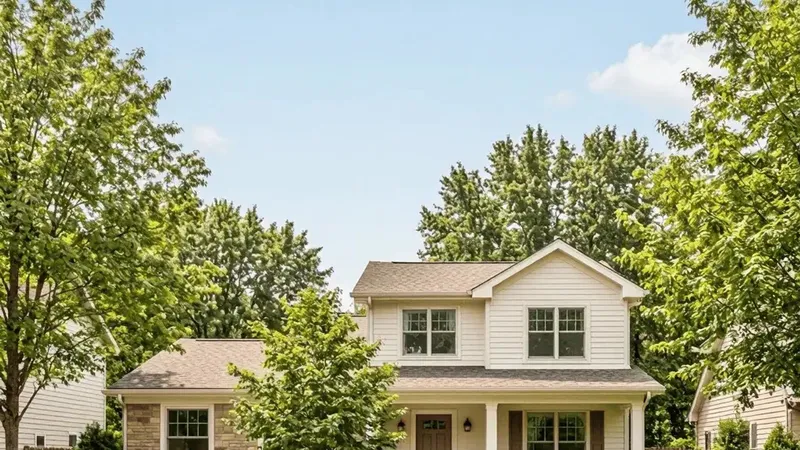
First impressions happen fast — often within the first few photos a buyer sees online. As of May 2026, the average home in Hamilton spent 36 days on market before selling, and in Burlington it was 32 — but that average hides a wide spread between well-prepared listings that move quickly and under-prepared ones that linger. Here’s how I advise sellers to prioritize their time, money, and timeline in the weeks before listing.
A week-by-week prep timeline
4–6 weeks out: Start decluttering room by room, book any small repairs that need a tradesperson’s schedule, and get a sense of your home’s value with a free home valuation so your pricing strategy and your prep budget are grounded in the same numbers.
2–3 weeks out: Deep clean, address curb appeal (mulch, lawn, exterior paint touch-ups), and decide whether full staging or a lighter furniture edit makes sense for your home. Book professional photography for as close to your list date as your home’s readiness allows.
The week of listing: Final clean, put away day-to-day clutter (mail, pet bowls, personal photos), open every curtain and turn on every light for the photo shoot, and make sure smaller rooms — common in character homes across Dundas and Hamilton’s lower city — are staged to feel as open as possible.
Start with decluttering, not renovating
Big renovations rarely pay for themselves at resale. Decluttering, deep cleaning, and depersonalizing spaces almost always do. Clear countertops, pack away excess furniture, and create a sense of space in every room. This matters everywhere in the corridor, but especially in character homes common in Dundas and Hamilton’s lower city, where smaller room sizes make clutter more visually costly than it would be in a newer Stoney Creek Mountain or Waterdown build.
Tackle small repairs
A sticking door, a leaky faucet, or a cracked tile might seem minor, but buyers notice — and these small issues can snowball into bigger concerns during a home inspection. A weekend spent on a repair list is time well spent, particularly with older housing stock where a buyer’s inspector may flag deferred maintenance as a negotiating point.
What’s worth spending on — and what isn’t
Kitchen and bathroom remodels rarely return their full cost at resale, and overly personal or trend-specific finishes can actually narrow your buyer pool. The spending that consistently pays off is smaller and less glamorous: fresh neutral paint, decluttering and depersonalizing, fixing anything visibly broken, a thorough deep clean (including carpets and grout), and addressing pet- or smoking-related odours before your first showing — a smell a buyer notices in the doorway is hard to undo with anything that happens after. If you’re unsure where your home falls on that spectrum, that’s exactly the kind of thing worth walking through with me before you spend a dollar.
Curb appeal sets the tone
Many buyers form an opinion before they even step inside, and in this corridor — where homes range from heritage streetscapes in Ancaster to newer subdivisions in Waterdown — curb appeal expectations vary by area. Fresh mulch, a tidy lawn, a clean front door, and good exterior lighting go a long way, especially for listing photos.
Let in the light
Open curtains, clean windows, and replace any dim or mismatched light bulbs with brighter, consistent lighting. Bright, well-lit photos consistently perform better online — and since most buyers in Hamilton, Burlington, and beyond now do the bulk of their searching on their phone before booking a single showing, your photos are doing more of the selling than you might expect.
Is staging worth it?
The data generally says yes. A staging investment of roughly 1.3% of list price has been shown to return an average of 7.1% over asking, and staged homes can sell up to 73% faster than comparable unstaged listings. Locally, staging typically runs $1,500–$3,500 for a condo and $3,000–$8,000 for a detached home depending on size — a relatively small cost set against Hamilton’s $755,202 and Burlington’s $1,205,121 average sale prices as of May 2026. Not every home needs full staging — sometimes a light touch (rearranging existing furniture, removing a few pieces) gets you most of the benefit for a fraction of the cost. I can tell you which approach makes sense once I’ve seen your home.
Professional photography matters
In a market where most buyers begin their search online, professional photography (and where appropriate, a short video walkthrough) is one of the highest-impact investments a seller can make. It matters just as much for a Stoney Creek starter home as it does for an Ancaster move-up listing — the bar for first impressions is the same regardless of price point.
Pricing it right from day one
Preparation only pays off if your home is priced against real, recent comparable sales rather than against hope. A listing’s first week or two of exposure is when it gets the most attention — buyers and agents both notice a new listing immediately, and interest tends to taper off the longer it sits. Overpricing relative to the comparables is the most common reason a well-prepared home still takes longer than the local average of 36 days in Hamilton or 32 in Burlington to sell. I’ll walk you through a comparative market analysis built from recent, genuinely similar sales in your specific area before you settle on a list price.
Selling a condo? A few extra steps
If you’re selling a condo in Burlington’s or Hamilton’s condo segment, order your status certificate early — it can take a condo corporation one to two weeks to prepare, and buyers will want time to review it during their conditional period. Requesting it before you list, rather than scrambling after an offer comes in, keeps your closing timeline on track. The real estate terms glossary covers what a status certificate actually contains if you want the full picture.
Ready to talk timing?
Every home and every street is a little different — what works for a character home in Dundas isn’t necessarily what works for a newer build in Waterdown. If you’re thinking about selling in the next few months, request a free home valuation and I’ll follow up with a tailored prep checklist for your home, or get in touch to talk through your timeline directly.